A comfortable home depends on more than just a powerful heating and cooling system. If conditioned air is escaping through gaps, cracks, and poorly sealed areas, or if heat is moving too easily through the walls, attic, and other parts of the home, your HVAC system may have to work much harder to maintain a comfortable temperature. This is where weatherization and insulation come into play. Although these terms are sometimes used interchangeably, they address different aspects of a home’s energy efficiency.
Weatherization focuses primarily on reducing unwanted air infiltration and improving the home’s overall resistance to outdoor conditions. Insulation, meanwhile, helps slow the transfer of heat between the inside and outside of the home. When used together, weatherization and insulation can help create a tighter, more comfortable home while reducing unnecessary energy use. In this article, our Solaire weatherization professionals explain how these two processes work to maximize efficiency in your home.
What Is Weatherization?
Weatherization is the process of making a home more resistant to outdoor temperatures, air leaks, moisture, and other environmental conditions. The goal is to reduce the amount of conditioned air that escapes and limit the amount of outdoor air that enters the home. Homes can lose air through many seemingly small areas, including gaps and cracks around windows, doors, foundations, vents, ductwork, lighting fixtures, chimneys, and other electrical units. Weatherization can help regulate home temperatures through the following methods.
- Air sealing
- Caulking
- Weatherstripping
- Sealing gaps around penetrations
- Improving window and door seals
- Fixing sources of air leakage.
These improvements can make it easier for your heating and cooling system to maintain the temperature you have selected on your thermostat.
What Is Insulation?
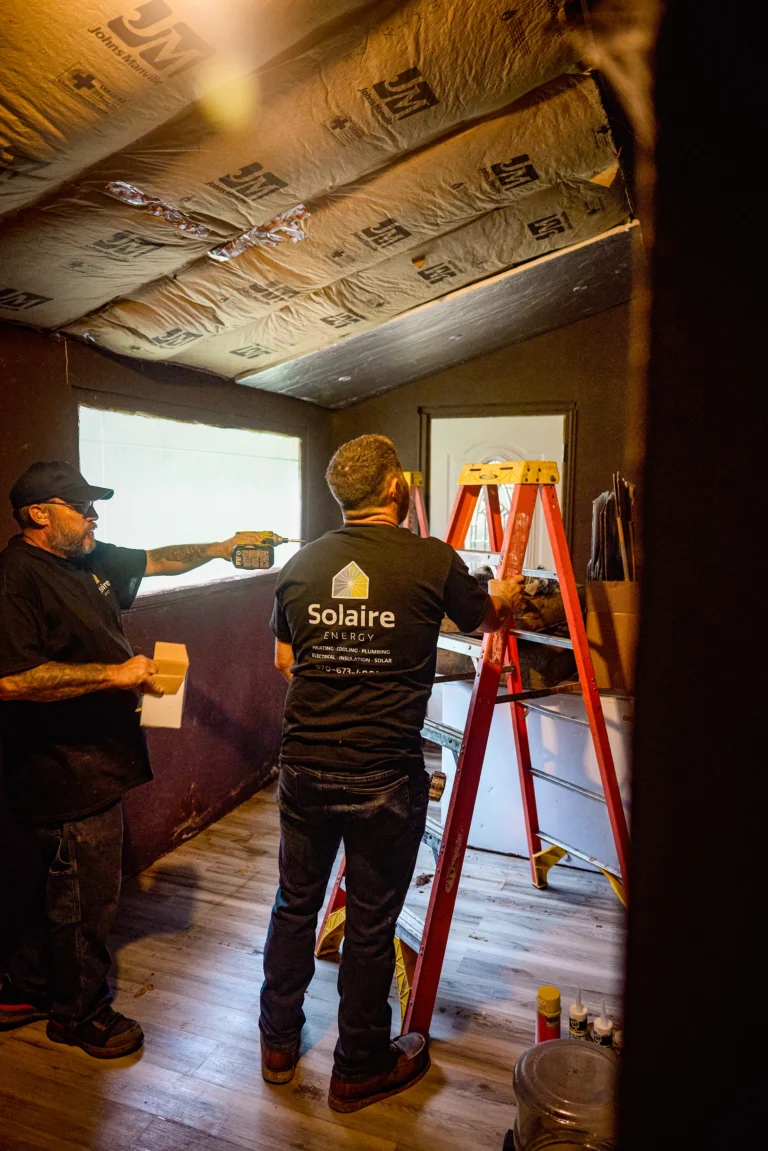
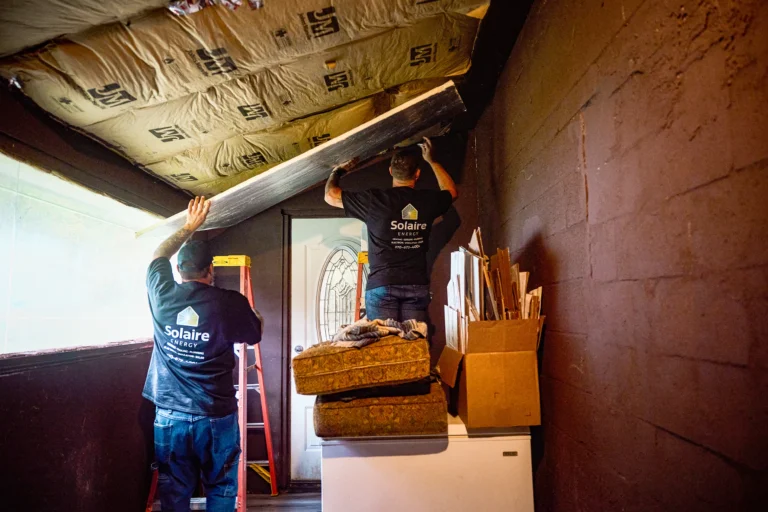
Insulation is the process of slowing down the transfer of heat. Heat naturally moves from warmer areas toward cooler areas. During the winter, for example, heat from your home’s interior naturally attempts to escape toward the colder outdoors. During the summer, outdoor heat moves into your cooler home. Insulation helps slow these heat transfer processes. Common types of insulation include the following materials.
- Fiberglass
- Cellulose
- Spray foam
Insulation is often installed in areas such as attics, exterior walls, basements, crawl spaces, floors, and any areas around pipes and mechanical systems. While insulation can be helpful in slowing the movement of heat, simply adding insulation to your home does not necessarily solve every energy-efficiency problem. If significant air leaks remain, your home may still lose conditioned air. This is where weatherization can be a helpful complement to insulation efforts.
How Weatherization and Insulation Work Together
You can think of your home’s thermal envelope as a barrier separating your conditioned indoor environment from the outdoors. Weatherization helps seal the envelope. Insulation helps strengthen the envelope’s resistance to heat transfer.
Imagine an attic with plenty of insulation but several unsealed openings around electrical wiring, plumbing, ductwork, and an attic hatch. The insulation may slow heat transfer, but air can still move through those openings. Conversely, imagine a home with excellent air sealing but insufficient insulation in the attic. The home may have fewer drafts, but heat can still move through the relatively under-insulated areas. Combining the two approaches addresses both problems.
Weatherization Reduces Air Leakage
Air sealing helps prevent conditioned air from escaping through cracks and openings. It can also reduce the amount of outdoor air entering the home through unintended pathways.
This can help reduce drafts and make temperatures feel more consistent from room to room.
Insulation Slows Heat Transfer
Once major air leaks have been addressed, insulation can help slow the movement of heat through the home’s building materials. This can help your home retain heated air during the winter and cooled air during the summer.
Together Weatherization and Insulation Improve the Thermal Envelope
A properly weatherized and insulated home can provide a more effective barrier between indoor and outdoor conditions. This can help your HVAC system maintain your desired temperature without having to compensate as frequently for unwanted air movement and heat transfer.
Where Should Weatherization and Insulation Be Addressed?
Every home is different, so the most effective improvements depend on the home’s construction, age, existing insulation, and sources of air leakage. However, some areas deserve particular attention.
The Attic
The attic is one of the most important areas to evaluate. Heat can escape through the ceiling during the winter and enter the home from above during the summer. Air sealing openings between the conditioned portion of the home and the attic can help reduce unwanted air movement, while adequate insulation can slow heat transfer.
Windows and Doors
Older or poorly sealed windows and doors can be significant sources of drafts. Weatherstripping, caulking, and other air-sealing measures may help reduce leakage around these areas. Depending on the condition and construction of the windows, additional improvements may also be appropriate.
Basement and Crawl Spaces
Basements and crawl spaces can contain numerous gaps and penetrations that allow outdoor air to enter the home. These spaces may also contribute to uncomfortable floors and rooms above them when insulation is inadequate. Addressing air leakage and insulation in these areas can help improve the overall thermal envelope.
Exterior Walls
Wall insulation can help reduce heat transfer between the home’s interior and exterior. If a home has inadequate or deteriorating insulation, improving it may be an important part of an overall energy-efficiency strategy.
What Happens If You Only Address One?
One of the biggest misconceptions about home energy efficiency is that insulation alone can solve every comfort problem. Consider a home with an attic full of insulation but significant air leakage around penetrations and the attic access point. The insulation may be performing its intended job, but uncontrolled air movement can still undermine the home’s energy efficiency. The reverse is also true. A home may have been thoroughly air sealed but still have inadequate insulation. In this case, there may be fewer drafts, but heat can continue moving through the home’s walls, ceiling, floors, or other insufficiently insulated areas.
This is why a comprehensive approach is often more effective than focusing on one improvement in isolation.
Create A More Comfortable, Energy Efficient Home with Weatherization and Insulation
While weatherization and insulation perform different functions, they both work toward the same larger goal. When these improvements are properly coordinated, they can help create a home that is more comfortable and better protected from changing weather conditions, regardless of the season. If you’re dealing with drafts, uneven temperatures, rising energy costs, or an HVAC system that seems to be working harder than it should, improving your home’s weatherization and insulation may be worth considering.
Are you ready to weatherize and insulate your home?
The best place to start is with an evaluation of the home’s current condition. A Solaire Energy professional can identify areas where air is escaping, determine whether insulation is adequate. Our team can help prioritize improvements based on the home’s specific needs to help improve your home’s comfort and energy efficiency today.
Contact us online today or call us directly at 570.673.4004 to learn more about weatherization, insulation, and other ways to improve your home’s comfort.
We proudly serve Canton, Pennsylvania and the surrounding area.