If parts of your home feel uncomfortable no matter how much you adjust the thermostat, the problem may not be your heating or cooling system.
Many homeowners assume they need a larger furnace, a new air conditioner, or better insulation. But in many homes, the real issue is air leakage—small openings that allow outside air to enter and indoor air to escape.
These leaks are often hidden in attics, basements, and wall cavities, so they’re easy to miss. But they can significantly affect your home’s comfort, energy use, and indoor air quality.
Below is a simple homeowner checklist to help you identify common signs that your home may need professional air sealing.
1. You Feel Drafts Around Floors, Walls, or Windows
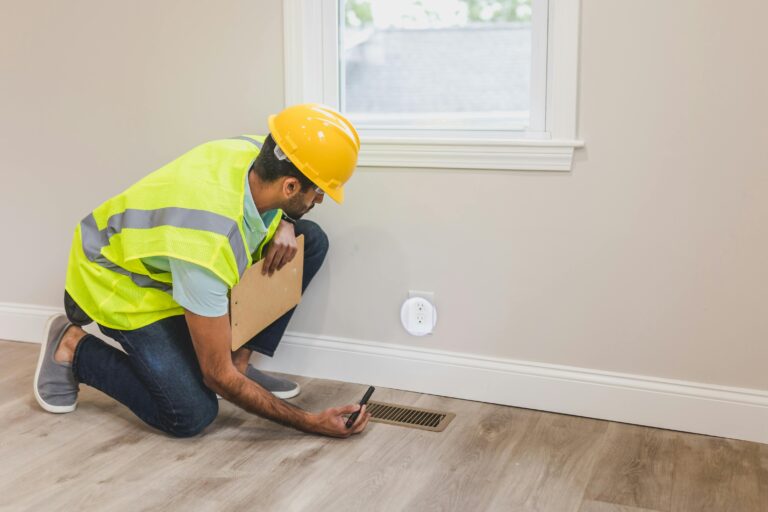
One of the most obvious signs of air leakage is a draft.
You may notice cool air moving around:
- Baseboards
- Window frames
- Electrical outlets on exterior walls
- Door thresholds
- Floor edges near exterior walls
Even if the thermostat shows a comfortable temperature, these drafts can make rooms feel cold and uncomfortable.
Drafts often occur because outside air is being pulled into the home through tiny cracks and gaps.
2. Some Rooms Are Always Too Hot or Too Cold
Uneven temperatures between rooms can be another major sign of air leakage.
You might notice:
- Upstairs bedrooms overheating in winter
- Second floors too hot in summer
- Basement rooms feeling cold year-round
- Certain rooms never reaching the thermostat setting
These comfort issues often happen when conditioned air escapes through leaks in the attic or basement before it can circulate throughout the home.
These problems can also be caused, or worsened, by deficiencies in ductwork air supply and returns.
3. Your Energy Bills Keep Increasing
If your heating or cooling bills seem unusually high, air leakage may be the cause.
When conditioned air escapes from your home, your HVAC system must work harder and run longer to maintain the desired temperature.
That extra runtime increases energy usage and utility costs.
Interestingly enough, air leakage worsens in extreme weather. This is because the bigger the difference between the inside and outside temperature, the greater the “stack effect” becomes, worsening energy loss from air leakage. (See Sign #6 for more information about stack effect.)
Many homeowners are surprised to learn that air leaks can waste a significant portion of the energy used to heat and cool a home.
4. Your HVAC System Runs Constantly
Does your furnace or air conditioner seem like it never shuts off?
Air leakage can cause your home to lose heated or cooled air faster than your HVAC system can replace it.
When that happens, your system runs more often just to keep up with the loss.
Over time this can lead to:
- Higher energy bills
- Increased equipment wear
- Reduced HVAC lifespan
Fixing air leaks often allows HVAC systems to operate more efficiently.
5. Your Home Feels Dusty or Stale
Air leaks don’t just affect comfort and energy use—they also affect indoor air quality.
When outside air enters through hidden gaps, it can bring:
- Dust
- Insulation particles
- Outdoor allergens
- Pollutants
Leaks in basements, crawlspaces, and attics can pull these contaminants directly into the living space.
Homeowners often notice increased dust buildup or unusual odors when air leakage is present.
6. Your Floors Feel Cold in Winter
Cold floors are a common complaint in many homes.
This often happens when cold air is pulled into the home through:
- Basement rim joists
- Foundation cracks
- Floor penetrations
This cold air can cool the floor surfaces of the home, making floors uncomfortable, especially the first floor.
As warm air is pushed upward and escapes through the attic, it creates a pressure difference that pulls cold air into lower parts of the home.
This process is part of what building scientists call the stack effect.
Air sealing helps stop this airflow so warm air stays inside where it belongs.
7. Ice Dams Form on Your Roof
Ice dams are often a sign of air leaks in the attic.
When warm air escapes from the home into the attic, it can warm the roof and melt snow. That melted snow refreezes near the roof edge, forming ice dams.
This can lead to:
- Roof damage
- Water leaks
- Gutter damage
Sealing attic air leaks helps prevent warm indoor air from reaching the roof.
8. Your Attic Feels Warm in Winter
If your attic feels noticeably warm during winter, that heat is likely escaping from your living space.
This means conditioned air is leaking through gaps around:
- Recessed lights
- Attic hatches
- Wiring penetrations
- Duct openings
Air sealing these areas can dramatically reduce heat loss.
9. Your Home Was Built Before 1970
Older homes were typically built before modern energy efficiency standards existed.
Many homes built before the 1970s have:
- Minimal air barriers
- Gaps in framing connections
- Large attic bypasses
- Unsealed wall penetrations
While older homes can still perform well, they often benefit greatly from professional air sealing upgrades.
10. Your Home Has Never Had an Energy Evaluation
Many homeowners have never had their home tested for air leakage.
Without testing, it’s almost impossible to know how much air your home is losing.
Professional home performance evaluations often include a blower door test, which depressurizes the home and reveals hidden leaks.
Technicians can then identify the areas where air sealing will make the biggest difference.
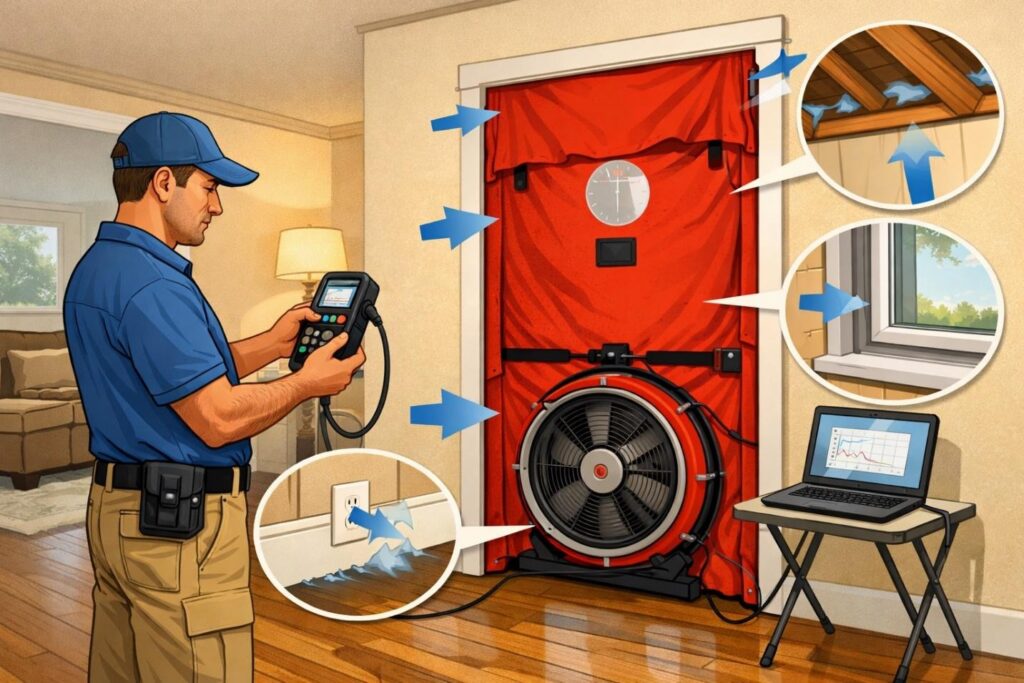
This illustration shows a blower door test, where a powerful fan mounted in a doorway pulls air out of a home to measure how much outside air leaks in. By identifying areas where air enters—such as around windows, outlets, and attic spaces—technicians can locate leaks and improve the home’s air sealing and energy efficiency.
What To Do If Your Home Shows These Signs
If several items on this checklist sound familiar, air leakage may be contributing to your comfort and energy problems.
The most effective next step is a professional home energy evaluation, also called a home energy audit.
During this evaluation, technicians can:
- Identify hidden air leaks
- Measure how much air your home is losing
- Check insulation performance
- Evaluate HVAC efficiency
From there, they can recommend targeted improvements that will make the biggest impact.
Make Your Home More Comfortable with Professional Air Sealing
Air sealing is one of the most effective upgrades for improving home comfort and reducing energy waste.
By closing hidden gaps and cracks throughout the home, air sealing can help:
- Eliminate drafts
- Create more consistent temperatures
- Reduce energy bills
- Improve indoor air quality
- Help HVAC systems operate more efficiently
Typical air sealing work includes highly targeted caulking, weatherstripping, drywall repairs and foam insulation.
Many homeowners notice comfort improvements immediately after major air leaks are sealed.
Ready to Make Your Home More Comfortable?
If your home feels drafty, uneven in temperature, or expensive to heat and cool, air leakage may be the hidden cause.
A professional home energy evaluation can identify exactly where your home is losing energy.
Our team can help you:
✔ Identify hidden air leaks
✔ Improve home comfort
✔ Lower heating and cooling costs
✔ Make your home more energy efficient
Contact Solaire Energy online or call 570-673-4004 today to schedule your estimate and ensure your new home is built for comfort, efficiency, and long-term performance.
Solaire Energy proudly serves Canton, Pennsylvania and surrounding areas.